Storm Damage on a Commercial Roof
What to do in the first 24 hours
2026-10-15 12 min read
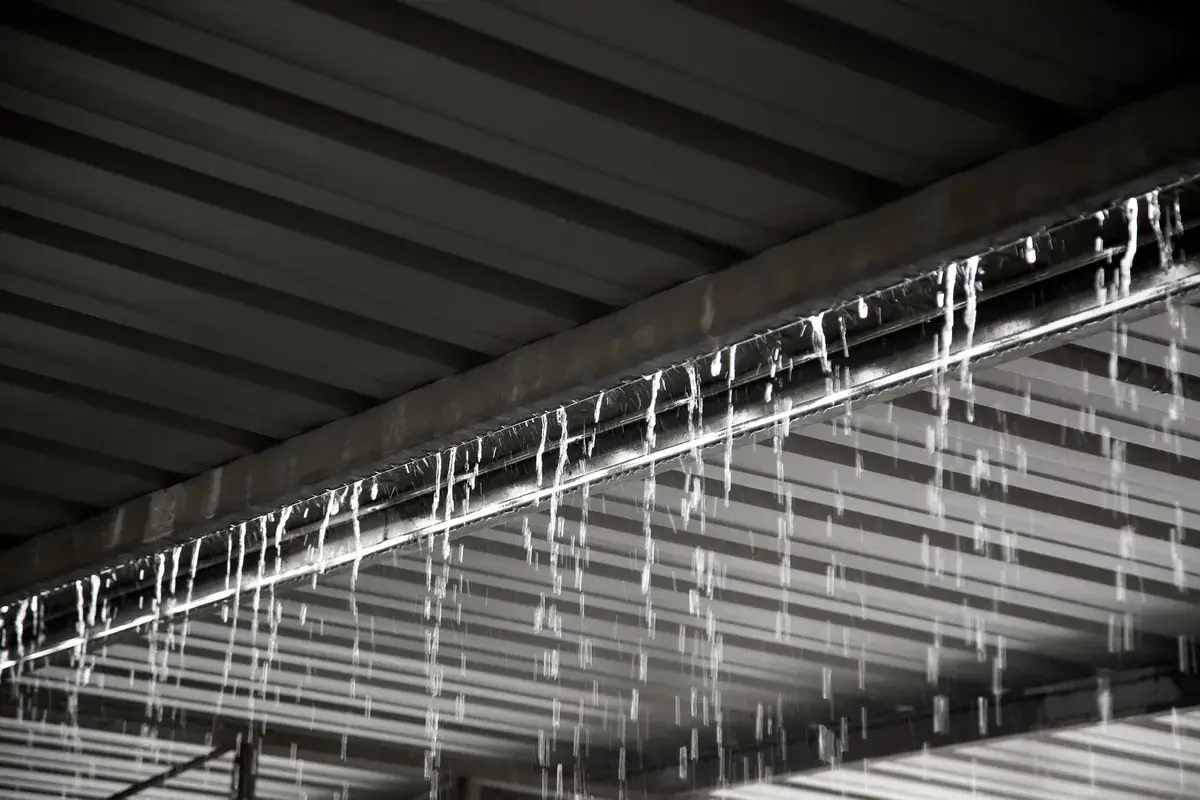
What to do in the first 24 hours
Spring in Melbourne brings the kind of storms that test every commercial roof in the city. Wind lifts loose sheets, hail cracks skylights and the rain comes down faster than the box gutters can carry it away.
If a storm has damaged your warehouse, factory or office roof, what you do in the first 24 hours makes a big difference to how much damage you end up with and how smoothly any insurance claim goes. Here's what to do, in order.
Knowing what usually goes wrong helps you know what to look for:
Often it's a combination. Wind lifts a flashing, debris blocks a sump and the rain does the rest.
Before anything else:
Once it's safe, protect what you can:
Don't climb onto the roof to try a temporary fix yourself. That's the job for a roofer with the right access and safety gear.
Before anything gets cleaned up or moved too far, take photos and videos of:
These photos are what your insurer and property manager will ask for first. You can't take them again once the mess is cleaned up.
Make safe is the temporary work that stops more water getting in. It's not the permanent repair. It usually involves:
Make safe comes first because every hour that water keeps coming in adds to the damage underneath. Most insurance policies also expect you to take reasonable steps to stop further damage, so keep a record of what was done and when.
In the rush after a storm, these mistakes are common and expensive:
Your insurer, loss adjuster and property manager will all ask for evidence. A good report from your roofer pulls it together in one place:
| Section | What it shows |
|---|---|
| Summary | What happened, when, and what was done to make it safe |
| Roof photos | Every damaged area, before and after make safe, labelled by location |
| Internal photos | Where water came in and what it damaged |
| Cause | Wind lift, hail, debris or gutter overflow, explained plainly |
| Existing condition | Any wear or rust that pre-dates the storm, kept separate from storm damage |
| Repair scope | Each item that needs fixing, with quantities |
| Price | A fixed price for the permanent repairs, itemised to match the scope |
When the report is clear, the adjuster can approve the repair quickly. When it isn't, you get questions, revisits and delays while the building sits under a tarp.
Hail deserves its own mention, because it hits commercial roofs in a particular way. Metal roof sheets usually come through a hailstorm with dents but no holes. Skylights are a different story. Polycarbonate and fibreglass sheets that have been in the sun for years go brittle, and hail can punch straight through them.
After a hailstorm, check the skylights from inside first. Daylight showing through cracks, shards on the floor or water coming in under a skylight are all signs. Broken skylights need covering quickly, because every rain after that comes straight in. Replacement uses new polycarbonate sheets matched to the roof profile, and it's often worth replacing the whole run while the roofer is up there, since the undamaged sheets are likely just as brittle. Our polycarbonate roofing and skylights page covers what's involved.
If you're a tenant, let your property manager or landlord know straight away. Roof damage often falls under the building owner's insurance, while stock and equipment usually fall under the tenant's own policy.
On a commercial claim, the insurer will often appoint a loss adjuster to inspect the damage. The adjuster decides what's covered, but they still need a contractor's report and quote to approve the repair. That's where good documentation from the roofer matters:
That last point matters more than most people realise. A roof with old rust or tired skylights doesn't stop a claim, but the insurer will want to know which damage the storm caused. A clear scope saves a lot of back and forth.
Whether the damage is covered is always the insurer's decision. Check your policy and ask your broker if you're unsure.
In a leased building, both parties usually have a role. It depends on the lease and the policies, but generally:
| Usually the building owner | Usually the tenant | |
|---|---|---|
| Roof sheets, gutters and skylights | Yes, through the building policy | Report it straight away |
| Ceilings and building linings | Often | Report it |
| Stock, equipment and fitout | Yes, through their own policy | |
| Business interruption | Their own policy, if they have cover | |
| Make safe | Often arranged by whoever gets to it first | Can arrange it if it can't wait |
The most important thing is that everyone knows what's happening. A tenant who arranges make safe on a building owner's roof should tell the property manager straight away and keep the records.
If the storm stops you trading, check whether your policy includes business interruption cover. It's a separate part of many business policies and has its own requirements for documenting lost income.
Once the weather clears and the scope is agreed, the permanent repairs start. On a commercial roof that might mean:
| Storm damage | Usual permanent fix |
|---|---|
| Lifted or bent roof sheets | Replace the sheets and refix with new fasteners |
| Hail cracked skylights | Replace with new polycarbonate sheets matched to the roof profile |
| Overflowed box gutter | Repair or upsize the gutter and add overflows |
| Damaged flashings | Replace and reseal |
| Collapsed or stained ceiling tiles | Replace tiles and repair the grid |
| Wet insulation, plasterboard or flooring | Remove, dry and reinstate |
If the storm found an existing weakness, like a box gutter that was never big enough, it's worth fixing that properly while the roofer is there. Otherwise the same thing happens in the next storm.
A distribution centre in the west lost a run of roof sheets along one edge in a spring storm. Staff had already climbed up with a tarp before anyone called a roofer, and one stepped through a skylight. Nobody was seriously hurt, but it was close. The make safe that followed took two hours with the right equipment.
A tenant in a south eastern industrial estate threw out two pallets of water damaged stock the morning after a storm to clear the floor. Their insurer later asked for photos of the damaged goods, and there weren't any. It made that part of the claim much harder.
An office building's box gutter overflowed during a storm and brought down a section of ceiling. The roof itself wasn't damaged at all. The gutter had simply been blocked for months. The insurer treated the gutter repair as maintenance, not storm damage, and only part of the ceiling was covered.
The best storm response is the damage that never happens. Before storm season:
Our roof inspections and maintenance service covers all of this on a schedule, so the roof is ready before the weather turns.
The roof is only half the job. Water that got inside can leave wet insulation, damaged ceilings and walls and, if left too long, mould. Our guide to commercial water damage and mould remediation covers what to do in the first 48 hours inside the building.
How quickly can a roofer get there? We'll have someone on site within one business day of your call. Tell us what's happening so we can bring what's needed to stop the water.
Will make safe be covered by insurance? Many policies cover reasonable steps to prevent further damage, but it depends on your policy. Keep invoices and photos of the make safe work and check with your insurer or broker.
Can we keep working in the building? Often, yes, away from the affected area. Keep people clear of wet areas near power and under sagging ceilings until they've been checked.
What if the roof was already in poor condition? It doesn't automatically stop a claim, but the insurer will want to separate storm damage from existing wear. An honest, itemised report helps everyone.
How long do permanent repairs take? It depends on the damage and on how long insurer approval takes. Small repairs can happen within days. Larger re-sheeting or skylight replacement may take a few weeks to schedule.
Storm damage usually needs a roofer, an electrician, a ceiling fixer and someone to sort the water damage, all coordinated around an insurer. That's a lot of phone calls in the middle of a crisis.
Our storm damage and make safe service handles the make safe, the photos and report for your insurer, the permanent roof repairs and the reinstatement inside. We'll have someone on site within one business day of your call, and we coordinate electrical make safe and water damage and mould remediation as part of the same job.
Send us the address, photos of the roof and the damage inside and tell us what's happening now. Get in touch.
We do makegoods all day, every day.
Let's talk scope.
Share the details and we'll come back to you with how we can help.
Ask us anything
👋 Hi! How can I help you today?
Ask about our make-good services, areas we cover, or how we can help with your commercial property.