Box Gutters and Warehouse Leaks
Why they cause most commercial roof leaks, and how to stop it
2026-03-12 13 min read
Why they cause most commercial roof leaks, and how to stop it
Ask anyone who has managed a warehouse for long enough where their worst roof leak came from and you'll hear the same answer more often than not. It wasn't the sheets. It wasn't the skylights. It was the box gutter.
Box gutters do a big job quietly. On most Melbourne warehouses and factories they collect the water off two roof slopes and carry it to the sumps and downpipes. When they work, nobody thinks about them. When they don't, the water doesn't spill harmlessly over the edge of the building. It runs back under the roof sheets and comes down inside, onto stock, ceilings, switchboards and floors.
Here's why that happens, what the warning signs look like and what actually fixes it.
An eaves gutter hangs off the outside edge of a roof. If it overflows, the water falls to the ground outside. Annoying, but rarely a disaster.
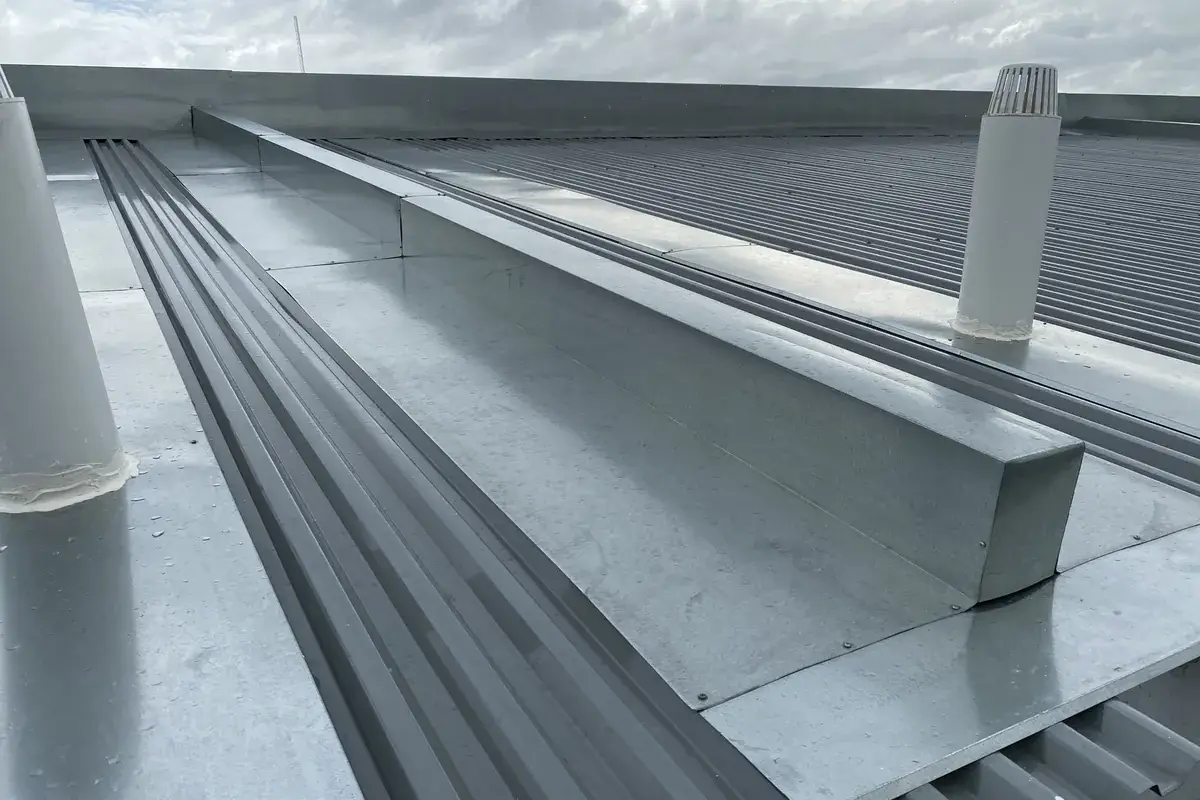
A box gutter sits inside the roof. It's a flat bottomed channel, usually running along the valley between two roof slopes or behind a parapet wall. Water that it can't carry has nowhere to go except back over the edge of the gutter, under the roof sheets and into the building.
That single design difference is why box gutters cause so many commercial leaks. An eaves gutter fails outside. A box gutter fails inside.
It helps to know what you're looking at, because a leak can start at any one of these parts:
On a typical warehouse, those parts have been sitting in the weather for decades. Any one of them can let you down.
Melbourne's weather does box gutters no favours. Long dry spells let leaves, dust and debris build up in the gutter. Then a summer thunderstorm drops more rain in an hour than the gutter was ever sized for. Autumn brings leaf fall from street trees and nearby parks. Winter keeps the gutter wet for weeks, which is when slow leaks at joints and rusted spots show up.
Add heat. A metal gutter in a Melbourne summer expands and contracts every day, and over the years that movement works sealant loose at the joints and stop ends. A gutter that was watertight when it went in will not stay that way on its own.
Most box gutter leaks come down to one or more of these.
Leaves, sticks, sediment, dead birds, tennis balls and the occasional forgotten tool. A box gutter only has so many outlets, and once a sump or outlet blocks, the gutter fills behind it. Sites near trees or with flat, slow draining gutters block faster than most.
Box gutters are made in lengths and joined. The joints, the stop ends and any low spots where water sits after rain are where rust starts. Once it gets through, every downpour drips straight through the hole.
Joints are sealed and riveted when the gutter goes in. Over years of heat, cold and movement those seals dry out and crack. The gutter can look fine from a distance and still leak at every joint.
Some gutters were never big enough for the roof area they drain, or the building was extended and the drainage wasn't upgraded to match. They cope with light rain and overflow in a heavy storm, which is why some leaks only ever show up in a downpour.
When a box gutter blocks or can't keep up, it needs somewhere safe for the extra water to go. That's what overflows are for, whether they're overflow outlets, rainwater heads or weirs that spill outside the building. Older warehouses often have none, or have overflows that are blocked, too small or sitting higher than the point where water gets into the building.
You don't need to get on the roof to spot a box gutter problem early. These are the signs to look for underneath:
If you're seeing any of these, the box gutter is the first place to check.
Most commercial box gutters in Melbourne are galvanised steel, Zincalume or Colorbond. A few older or higher end buildings have stainless steel.
All of the coated steels do well for years, as long as water drains away and the coating isn't damaged. Problems start when:
That's why a gutter can look sound from a distance and still have rust holes at every low spot and joint. The rust starts where the water sits.
Not every box gutter problem needs a new gutter. The right fix depends on what's actually wrong.
| What we find | Usually the fix |
|---|---|
| Blocked sumps and outlets, gutter in good condition | Clear it, then fix whatever keeps blocking it |
| A few rusted joints or leaking laps | Repair and reseal those sections |
| Rust through along the length of the gutter | Replace the gutter |
| Gutter too small for the roof it drains | Upsize the outlets and downpipes, or replace the gutter |
| No overflows, or overflows that don't work | Add or rebuild overflows so water spills outside |
Clearing a blocked gutter fixes today's leak. It doesn't fix the reason it blocked. If the same gutter keeps blocking, it usually needs leaf guards, bigger outlets or a gutter with more fall, otherwise you'll be back on the roof after the next storm.
Box gutter design and installation in Australia is covered by the roof drainage section of the plumbing standards (AS/NZS 3500.3), which sets out how gutters, sumps and overflows should be sized. Replacement and resizing should be done by licensed roof plumbers who work to it.
A quick look from a ladder won't tell you much. A proper inspection walks the full length of every gutter and checks:
You should get photos of all of it, so you can see exactly what was found and track how it changes over time.
Box gutter work ranges from a few hours of clearing to a full replacement over several days. The cost comes down to:
We quote after we've seen it, because the same leak can be a half day repair or a full replacement depending on what's actually there.
A logistics tenant in the west kept buying new pallets of stock to replace the ones ruined under one corner of the warehouse. Three different contractors had sealed the roof sheets above it. The leak was coming from a box gutter twenty metres away, where a blocked sump was backing water up under the sheets and the water was running along a purlin before it dripped.
A manufacturer in the south east only ever had leaks in summer thunderstorms. The gutter was in good condition. It simply wasn't big enough. The building had been extended a decade earlier and the new roof area drained into the original gutter. Bigger outlets and a new overflow fixed it.
A property manager arranged a gutter clear every autumn for years and still got tenant calls every winter. The gutter was clear. The joints had rusted through. Clearing was the right maintenance, but it couldn't fix a gutter that had reached the end of its life.
If you're a tenant, read what your lease says about gutters. Many commercial and industrial leases ask the tenant to keep gutters and downpipes clear during the lease. If that hasn't happened, blockages and the damage they cause can come back to you at handover.
On the other hand, a box gutter that has simply rusted out with age is usually a landlord issue, not a tenant one. It's worth knowing which is which before the final inspection. We cover the roof side of lease handovers in more detail in our guide to whether the roof is part of your make good.
Box gutters reward a little attention. A few habits go a long way:
If you look after several buildings, putting the roofs on a schedule saves a lot of reactive call outs. Our roof inspections and maintenance service covers gutter and sump clearing, small repairs on the spot and a photo report after every visit.
Can I just run silicone over the leaking joints? It might stop a drip for a while. It won't last. Sealant over rust or dirt doesn't bond properly, and the joint keeps moving. A proper repair cleans back the joint, treats or replaces the rusted metal and reseals it with the right product.
How long does a box gutter replacement take? It depends on the length and access, but most replacements are done in days, not weeks. We replace in sections so the roof stays watertight overnight.
Do we have to clear the warehouse underneath? Usually not. Most of the work happens from the roof. We might ask you to move stock or cover equipment directly under the gutter line while we work.
Why does it only leak in heavy rain? Usually the gutter or outlets are too small, or there's no overflow. Light rain drains away. Heavy rain overflows back into the building.
Can you work on the gutters while we're operating? Yes. Box gutter work is roof work, so your operation carries on underneath. We plan around deliveries and anything sensitive below.
Box gutter leaks are usually fixable without replacing the whole roof. The key is finding the actual cause before anyone starts sealing things. Our box gutters and roof drainage team repairs and replaces gutters, sumps, rainwater heads and downpipes on warehouses, factories and commercial buildings across Melbourne. If you're not sure the gutter is the problem, our roof leak repairs service traces the water back to where it starts.
And because roofing sits with our make good work, the same team can repair the ceilings, walls and floors the water damaged. One quote, roof and all.
Send us the address, photos of the gutter and any water marks inside and tell us when it leaks. Get in touch.
We do makegoods all day, every day.
Let's talk scope.
Share the details and we'll come back to you with how we can help.
Ask us anything
👋 Hi! How can I help you today?
Ask about our make-good services, areas we cover, or how we can help with your commercial property.