Is the Roof Part of Your Make Good?
What commercial leases usually ask for up top
2026-08-15 12 min read
What commercial leases usually ask for up top
Most tenants planning a lease exit think about the inside of the building. Partitions out, walls patched, carpet replaced, racking removed, floor restored. The roof rarely makes the list.
Then the final inspection comes around and someone asks about the water stain on the ceiling, the yellowed skylights or the holes left in the roof where the air conditioning units used to sit. Suddenly the roof is very much part of the make good.
Here's how to work out what your lease is likely to ask for on the roof, what usually sits with the tenant and what sits with the landlord, and how to deal with it before it holds up handover.
This is general information, not legal advice. Every lease is different, so read yours and get advice on anything unclear.
The roof is out of sight. Tenants rarely go up there, condition reports often don't cover it in detail and the make good conversation tends to focus on what people walk past every day.
But leases commonly ask the tenant to hand the premises back in the condition they took them, allowing for fair wear and tear, and to keep the premises in repair during the lease. On many commercial and industrial buildings the roof, gutters and skylights fall within the premises. If they've been damaged or altered during the tenancy, they can end up on the make good list.
Before anything else, find these parts of your lease. Between them they decide what the roof needs at handover:
If the wording is unclear, get advice before you agree to any roof scope. A lawyer who works with commercial leases can tell you where you stand far more reliably than a contractor can.
Lease wording varies, but these are the roof items that most often come up at handover:
Fair wear and tear is the gradual decline that comes from time, weather and normal use. On a roof that usually means:
What it usually doesn't cover:
The line is rarely perfectly clear, which is why good records and an early look at the roof make such a difference.
This comes back to your lease, the condition the roof was in when you moved in and what caused the problem. A few things generally hold true:
| Roof item | Usually tenant | Usually landlord |
|---|---|---|
| Removing plant, signage or exhaust fans the tenant installed | Yes | |
| Sealing penetrations the tenant created | Yes | |
| Damage caused by the tenant's contractors on the roof | Yes | |
| Gutters blocked from lack of clearing, where the lease requires it | Often | |
| Ceiling damage from leaks the tenant didn't report | Sometimes | |
| Old age rust and general wear of roof sheets | Usually | |
| A roof at the end of its life that needs replacing | Usually | |
| Original skylights that have aged and yellowed | Usually, unless the lease says otherwise | |
| Asbestos roofs that pre-date the tenancy | Usually |
For retail premises in Victoria, the Retail Leases Act 2003 generally makes the landlord responsible for maintaining the structure of the premises, which often includes the roof. Industrial and office leases are usually governed by the lease terms alone, so the wording matters even more.
Where the cause is unclear, an independent look at the roof before works start is worth far more than an argument after the inspection. Good records help both sides, which is why we always recommend a proper ingoing condition report. Our guide to dilapidation reports and make good covers why.
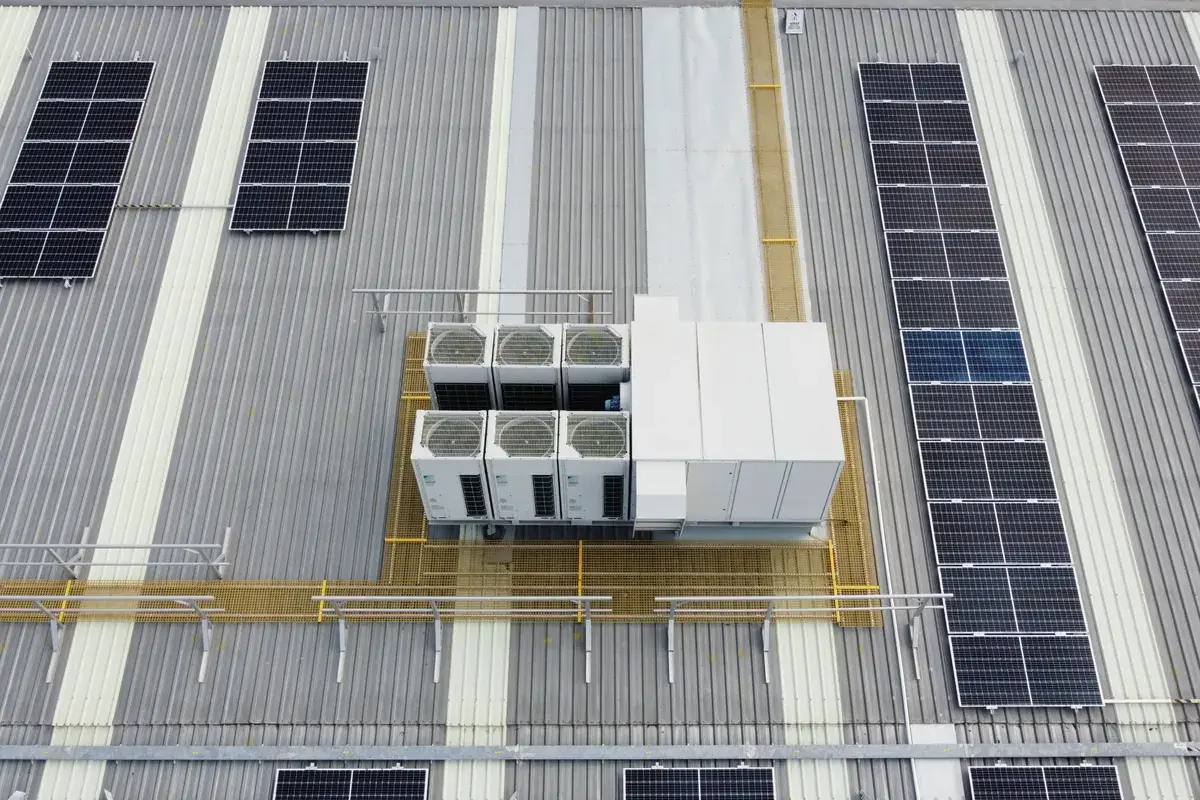
When a tenant removes rooftop air conditioning, exhaust fans or a cool room condenser, the roof underneath is left with penetrations. Sometimes there's a plinth, frames and a mess of old sealant too. Patching those holes with a dab of silicone won't pass a decent inspection and won't stay watertight. They need proper flashings or replacement sheets.
Polycarbonate and fibreglass skylight sheets yellow and become brittle with age. A forklift driver or contractor stepping on one leaves an obvious crack. Whether the tenant replaces them depends on their condition at the start and what caused the damage, so photos from the ingoing report matter. Our polycarbonate roofing and skylights page covers what replacement involves.
Stained ceiling tiles are one of the first things a property manager notices. If the leak was reported promptly, it's often a landlord repair. If it wasn't, or it was caused by the tenant's plant or contractors, it's likely to end up on the make good list along with the ceiling tiles it damaged.
If the lease asks the tenant to keep gutters clear and they haven't been touched for years, blockages and the damage they caused can come back to the tenant.
More tenants are putting solar on their roofs. At lease end, unless you've agreed in writing that the system stays, it may need to come off. That means the panels, the rails and the mounting brackets, with every fixing point sealed or the sheets replaced underneath. It needs planning with your solar installer and your roofer, not a day before handover.
Some older warehouses still have fibre cement roofs that contain asbestos. A tenant isn't usually responsible for replacing an asbestos roof that was there before they arrived. But if tenant work damaged it, or the tenant's plant was fixed through it, removing that plant needs care, a licensed removalist and a clearance certificate. Our asbestos guide covers the process.
A food manufacturer in the south east removed six rooftop condensers at lease end and had their maintenance contractor patch the holes with sealant. The property manager's roofer found the patches leaking at the first rain after handover. The tenant ended up paying for new sheets and flashings anyway, plus the ceiling damage.
A tenant in a northern industrial estate assumed the yellowed skylights were their problem and budgeted to replace all forty. Their ingoing report showed the skylights were already discoloured when they moved in. The landlord agreed they were fair wear and tear, and the tenant only replaced the three that had been cracked during the lease.
A logistics operator added a large solar system mid lease with landlord consent but never agreed in writing what happened at the end. At lease end the landlord wanted it removed. Removal, refixing and sealing the roof took far longer than planned, because nobody had booked it until the final month.
In an industrial estate or office building with several tenants, the roof is often shared. One tenant's plant might sit on a roof that covers three tenancies, and a leak above your unit might start in a gutter above someone else's.
That makes the lease definition of the premises especially important. Many multi tenant leases treat the roof as common property maintained by the landlord, with tenants only responsible for what they installed and any damage they caused. If you're in a shared building, find out exactly which parts of the roof, if any, are yours before you agree to a scope.
Roof mounted signage, antennas, satellite dishes and their brackets all leave fixing points when they come off. Like plant, those holes need proper flashing or replacement sheets, not a dab of sealant. Old cable runs across the roof are easy to forget too.
The roof is the one part of a make good you can't see from the floor, so it's the one most likely to surprise you. A roof inspection a few months before lease end gives you time to:
Roof work doesn't like being rushed, and the weather doesn't always cooperate. A simple timeline helps:
Whether it's at the start or the end of a lease, a useful roof report covers:
Done properly at the start of a lease, it saves arguments at the end. Done properly at the end, it gives everyone the same picture of what needs to happen.
Do I have to replace the whole roof at lease end? Very rarely. A roof at the end of its natural life is usually a landlord issue. Tenants are more often responsible for specific damage, penetrations and anything they added.
Can I leave my rooftop plant behind? Only if the landlord agrees, preferably in writing. Some landlords are happy to keep working air conditioning. Others want everything removed.
Who pays for leaks during the lease? It depends on the lease and the cause. Report leaks promptly in writing, either way. A leak that was reported and ignored is a very different conversation from one that was never mentioned.
Can the roof work happen while we're still trading? Usually, yes. Most roof work happens above an operating building, and it's often better done before you move out so any leaks show up while you're still there to spot them.
Roof work and make good work are usually connected. Plant comes off the roof at the same time as the fitout comes out underneath. A roof leak means a ceiling repair. Skylights get replaced while the warehouse floor is being restored.
That's why we include roofing in our make good scope. Our roofing solutions cover leak repairs, metal roof replacement and restoration, box gutters, skylights and storm damage, alongside the strip out, repairs and handover work inside. One contractor, one quote, one handover.
Send us the address, your lease timing and any photos of the roof. We'll check it against the lease and come back with a fixed price. Get in touch.
We do makegoods all day, every day.
Let's talk scope.
Share the details and we'll come back to you with how we can help.
Ask us anything
👋 Hi! How can I help you today?
Ask about our make-good services, areas we cover, or how we can help with your commercial property.