Carpet Tile Replacement Melbourne
Why the floor underneath matters as much as the tile
2025-09-15 11 min read
Why the floor underneath matters as much as the tile
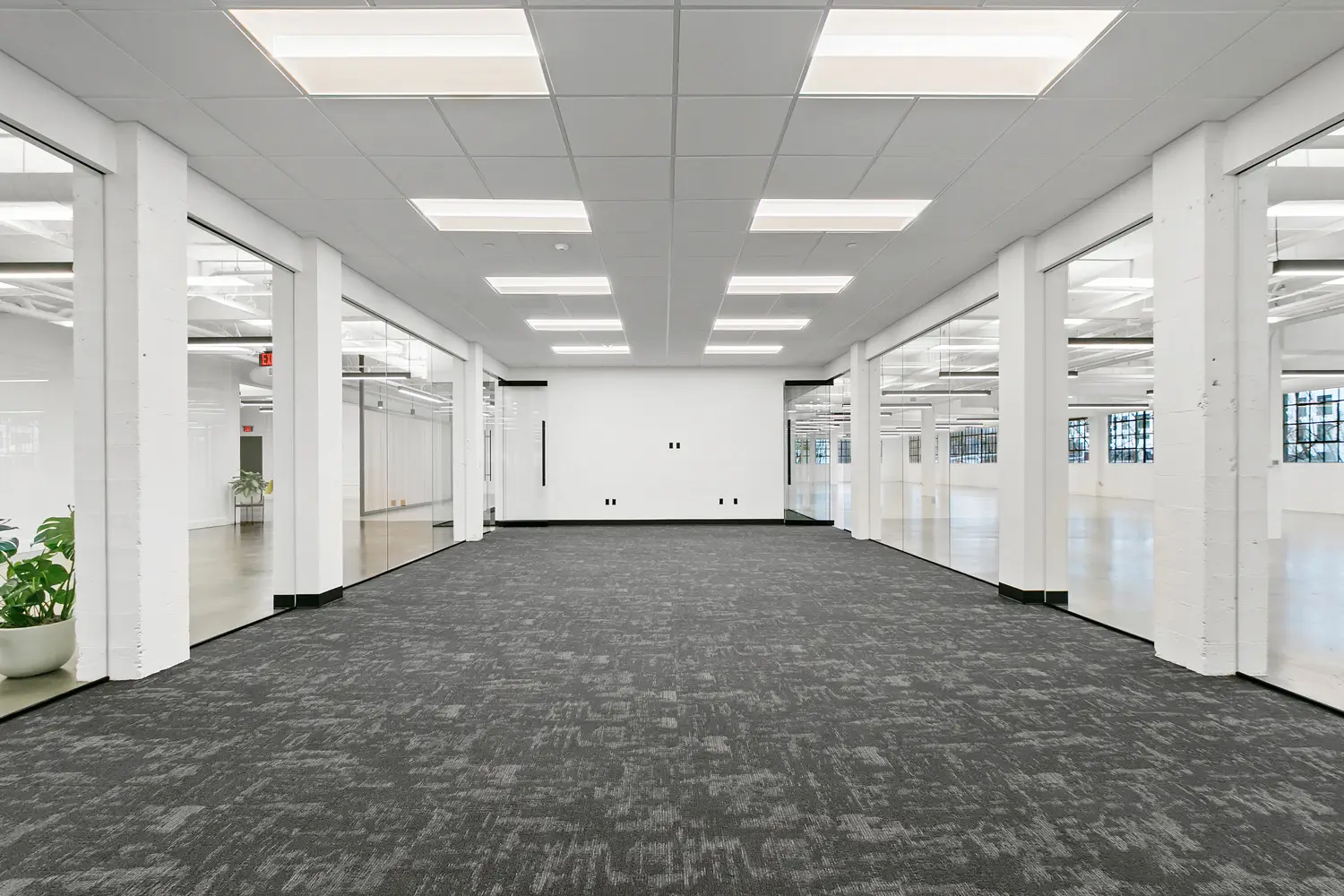
Carpet tile replacement is one of the most visible parts of a commercial make good. When a tenant hands back keys, the floor is one of the first things a landlord or property manager looks at. Stained tiles, lifted edges, patchy replacement sections or a floor that is clearly not the same product as the base build spec are all reasons a make good gets rejected at the final inspection.
Done properly, a carpet tile replacement is straightforward. Done cheaply or without proper floor preparation, it fails — and the tenant ends up paying twice. This guide covers what a compliant carpet tile replacement actually involves, why floor preparation is the part that most people underestimate and how it fits into a broader make good project.
---
Before any tiles are ordered or floors are ground, the starting point is the lease. Most commercial leases that include a carpet tile replacement obligation will specify one of two things: a return to the original base build specification, or a return to a condition consistent with the ingoing condition report.
In practice, this usually means matching the original carpet tile product — or, if that product is no longer available, finding a tile of comparable quality, colour and pile weight that the landlord will accept. It does not mean installing the cheapest tile that technically covers the floor. A landlord who specified a mid-range commercial carpet tile at lease commencement is entitled to have it returned to that standard.
The condition report is the key document here. If the original tile specification is noted in the report — and ideally photographed — there is no argument about what the standard is. If the report is unclear or missing, it becomes a conversation with the landlord. That conversation goes better if you have a make good contractor who knows what base build commercial carpet tiles look like and can identify a compliant match.
---
Most tenants focus on the tile itself. The floor underneath it rarely gets the attention it deserves — and this is where most carpet tile installations fail.
A concrete floor at the end of a commercial tenancy is not a clean slate. It has residual adhesive from the previous installation, high spots and low spots from wear and movement, oil or chemical contamination in industrial spaces, paint or sealant from previous works and sometimes significant damage from furniture loading, heavy equipment or water events. All of that needs to be dealt with before a new tile goes down.
Adhesive residue is the most common issue. Old pressure-sensitive adhesive left on a floor prevents new adhesive from bonding correctly. Even when the new tile appears to sit flat initially, residual adhesive creates irregular bonding surfaces that cause tiles to lift, shift or develop visible ridges over time. The landlord will see it at the final inspection. Getting it removed properly at the start is significantly cheaper than replacing tiles that fail after installation.
Surface level matters more than most people realise. Carpet tiles are thin. An uneven substrate — even a minor high spot — telegraphs through the tile surface and causes premature wear at that point. Over a tenancy, a floor that was installed on an uneven surface will look noticeably worse than one that was installed on a properly prepared substrate. For a make good, where the goal is a floor that looks uniform and compliant, an uneven surface is a problem from day one.
Contamination — oil, paint, sealers and similar substances — prevents adhesive from bonding to the concrete at all. Even where contamination is not visible to the eye, it can cause adhesive failure in specific areas. Professional grinding removes contamination from the surface layer of the concrete and opens the concrete pores to create the ideal bonding surface.
---
Diamond grinding is the standard method for commercial floor preparation before carpet tile installation. It is not the same as a light sand or a mop with a cleaning solution. Commercial diamond grinding equipment removes material from the top layer of the concrete slab, taking adhesive residue, contamination, high spots and surface irregularities with it.
The process uses HEPA-filtered dust extraction to contain the grinding dust — important both for site safety and for the cleanliness of the floor surface. A contaminated surface after grinding defeats the purpose.
After grinding, a 24 to 48 hour stabilisation period allows the floor to off-gas and fully cure before adhesive is applied. Skipping this period is a shortcut that compromises the bond. The rule that applies to every other stage of a make good applies here too: you cannot rush the substrate preparation and expect the finish to hold.
Moisture testing is the other step that gets overlooked. Concrete floors can retain or transmit moisture at levels that affect adhesive performance and, over time, cause tiles to lift or develop mould growth beneath them. Australian standards provide clear moisture thresholds for carpet tile installation. A floor that exceeds those thresholds needs remediation before tiles go down — not after.
---
Sourcing the right tile is more nuanced than it sounds. Commercial carpet tile products change. Manufacturers update their ranges, discontinue products and change colour names between collections. A tile that was installed five or ten years ago may no longer be available in its original form.
When the original product is still available, the job is straightforward — same product, same colour, same batch where possible to minimise variation. When it is not, the goal is a compliant match: a tile of equivalent pile weight, construction and colour profile that the landlord will accept as meeting the base build standard.
This is where the condition report and any original fitout documentation helps. If there is a product code in the original fitout specification, sourcing becomes much easier. If there is nothing in writing, a site visit and comparison against any remaining original tiles is how the match gets established.
One thing worth understanding: not all carpet tile products are equal. The difference between a heavy commercial tile rated for high-traffic environments and a light commercial or residential-grade tile is significant, both in terms of durability and in how it reads to an experienced landlord or property manager. Specifying the right product grade for the tenancy type is part of what a make good contractor brings to this process.
---
With the floor prepared, moisture-tested and the product confirmed, installation follows a clear sequence.
Layout planning comes first. Carpet tiles are installed in a grid pattern and the layout needs to be planned to minimise cuts at the edges, maintain pattern alignment across the space and work with the room geometry. A poorly planned layout results in thin cut tiles at perimeters and misaligned patterns that are immediately obvious on inspection.
Adhesive application is the next phase. Commercial carpet tile installations use pressure-sensitive adhesive systems — not permanent glue, which would make future removal and replacement unnecessarily difficult. The adhesive is applied to the prepared floor and allowed to flash off to the correct tackiness before tiles are laid. Applying tiles too early or too late in the adhesive's open time affects the bond.
Each tile is placed, aligned and rolled to ensure full adhesive contact and eliminate air pockets. Edge trimming and transition installation — where carpet tiles meet other flooring types, door thresholds or walls — is the detail work that separates a professional installation from an amateur one. These transitions are what the landlord looks at closely.
---
Flooring is almost always one of the last phases of a make good project, and the sequencing matters. Carpet tiles should go down after ceiling works are complete, after all patching and painting is done, after electrical and data reinstatement is finished and after the bulk of the final clean has occurred.
The reason is simple. Carpet tiles are vulnerable to damage from trades working above them. A painter who drops a drop sheet, a sparky who runs a cable across a fresh floor, a cleaner who drags equipment across newly laid tiles — all of these create problems that require re-laying affected areas. Installing flooring at the right point in the sequence protects the investment.
The final clean happens after the tiles are laid — a final vacuum and wipe-down of the entire space to remove any dust or debris from the installation itself. This is what the floor looks like when the landlord does the final walkthrough.
Documentation matters here too. Photographic records of the floor preparation phase, the moisture test results, the product specification and the completed installation give the landlord and property manager confidence that the work has been done properly. For a tenant who needs to demonstrate make good compliance, this documentation is as important as the physical result.
---
One of the most common questions we get is whether a partial replacement — replacing only the stained or damaged tiles rather than the entire floor — is acceptable for a make good.
The answer depends on the lease, the extent of the damage and the condition of the remaining tiles. If the lease requires the floor to be returned to its original condition and the existing tiles are significantly worn or discoloured from years of use, replacing only the visibly damaged tiles will not produce a compliant result. The replaced tiles will look different from the originals — different colour, different pile compression — and the landlord will notice.
If the existing tiles are in genuinely good condition and the damage is localised, a well-matched partial replacement may be acceptable. But this is a decision to make in consultation with the landlord or property manager before works start, not an assumption to make and then present as a fait accompli.
Where a partial replacement is agreed, sourcing a match from the same manufacturer, same product line and same dye lot is essential. Even within the same product, tiles from different dye lots can vary noticeably. This is a detail that matters.
---
Does the lease always require full carpet tile replacement? Not necessarily. If the ingoing condition report shows the floor was in good condition at the start of the lease and the tiles are only showing fair wear and tear, the landlord may accept a clean rather than a replacement. However, staining, significant pile wear or damage beyond fair wear and tear will typically require replacement.
Can carpet tiles be removed and reinstalled? Pressure-sensitive adhesive tiles can sometimes be removed and reinstalled if they are in good condition and have not been down for too long. However, for a make good, the question is usually whether the existing tiles meet the required standard — and if they do not, reinstalling them does not solve the problem.
How long does a carpet tile replacement take? For a standard office floor, floor grinding and preparation typically takes one to two days. The floor then needs 24 to 48 hours to stabilise. Installation for a medium-sized office is usually one to two days. Allow a week from start to finish to be safe, with the installation scheduled to be one of the last phases of the make good.
What happens if the original tile product is discontinued? We source a compliant match — same construction type, equivalent pile weight and a colour that is acceptable to the landlord. The match should be presented to the landlord or property manager for approval before installation. Do not assume a match will be accepted without prior confirmation.
---
The cost of a proper carpet tile replacement — with correct floor preparation, the right product and professional installation — is almost always less than the cost of doing it twice. A rejected make good means more contractor fees, a delayed handover and a landlord who is no longer being patient about timeline.
The floor is one of the most visible things in a tenancy. It gets looked at closely. Getting it right the first time is not just about compliance — it is the fastest way to close out the make good and move on.
Carpet tile replacement as part of a make good in Melbourne? Get in touch.
We do makegoods all day, every day.
Let's talk scope.
Share the details and we'll come back to you with how we can help.
Ask us anything
👋 Hi! How can I help you today?
Ask about our make-good services, areas we cover, or how we can help with your commercial property.