Asbestos Cement Roofs: Restore, Overclad or Replace?
Your options for an old fibre cement warehouse roof
2026-09-01 11 min read
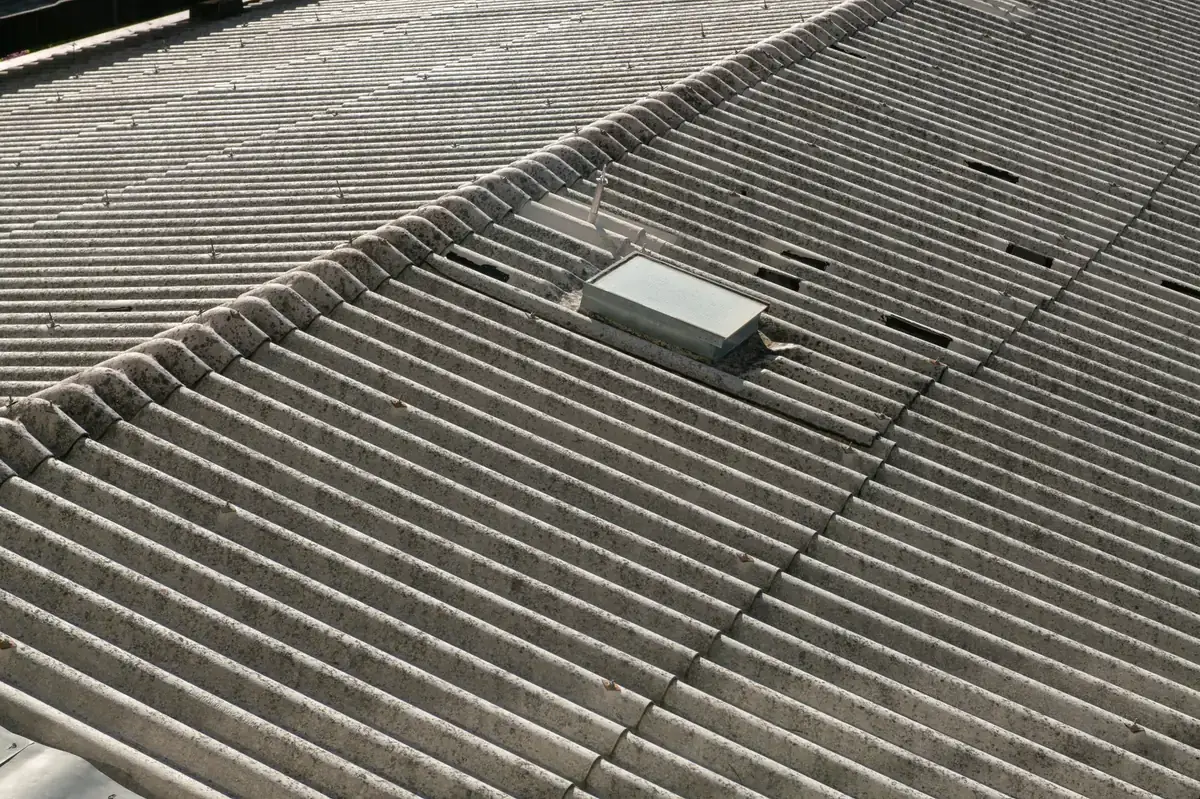
Your options for an old fibre cement warehouse roof
Plenty of Melbourne warehouses and factories built before the late 1980s still have a fibre cement roof. Corrugated, grey, often streaked with moss and lichen. On many of them, that sheet contains asbestos.
Sooner or later the roof starts leaking, a sheet cracks or an insurer starts asking questions. Then the owner or property manager has three options on the table. Restore it, overclad it or replace it.
This post walks through each option for commercial and industrial roofs, what it involves and when it makes sense. One thing up front. Any work that disturbs asbestos cement is done by a licensed asbestos removalist, not a general roofer. We coordinate that work. We don't skip it.
This is general information. Every roof is different, and the right answer for yours comes from an inspection, the asbestos register and advice from the right licensed people.
You can't confirm asbestos by looking. But a few signs point to it:
Victorian workplaces in buildings built before 2004 need an asbestos register. Ask the owner or property manager for it. If the roof isn't listed and you suspect it, get a sample tested by a competent person before anyone works on it.
Until it's confirmed either way, treat it as asbestos.
Asbestos cement is stable while it's sound and left alone. The trouble is that roofs don't get left alone, and they don't stay sound forever.
So the roof that was fine for forty years starts costing money in leaks, repairs and safety controls. That's usually when the restore, overclad or replace conversation starts.
Before looking at the options, a few things apply to every one of them:
Any contractor who suggests a quick pressure clean and a coat of paint on an asbestos roof is telling you something you shouldn't do.
Restoring means repairing and sealing the existing sheets so they last longer. On an asbestos cement roof, the work has to happen without disturbing the sheet surface.
What it usually involves:
When restoration can make sense:
The catches:
Overcladding means installing a new metal roof over the top of the existing asbestos cement sheets. The old roof stays in place, sealed underneath the new one.
What it usually involves:
When overcladding can make sense:
The catches:
Replacing means removing the asbestos cement sheets completely and installing a new metal roof.
What it usually involves:
When replacement makes sense:
The catches:
| Restore | Overclad | Replace | |
|---|---|---|---|
| Asbestos stays in place | Yes | Yes | No |
| Stays on the asbestos register | Yes | Yes | No |
| Licensed asbestos work needed | For any sheet removal | For fixings and any removal | Yes, for the whole roof |
| Disruption below | Low | Low to medium | Medium to high |
| Expected life | Shortest | Long | Longest |
| Relative cost | Lowest | Middle | Highest |
| Good fit for | Sound sheets, short horizon | Sound structure, can't stop operations | Failing roof, long term building |
There's no single right answer. The decision usually comes down to these questions:
If you're a tenant, an asbestos cement roof that was there before you moved in usually isn't yours to replace. But a few things can come back to you:
Removing your plant from an asbestos roof isn't a quick unbolt job. The fixings go through asbestos material, so removal and making good the sheets needs licensed controls. Our guide to what the roof means for your make good covers the tenant and landlord split in more detail.
A food distributor in the south east had an asbestos cement roof with leaks over the cold storage area. Full removal would have meant shutting part of the operation down. The structure checked out, so the owner chose to overclad. The building stayed running, the leaks stopped and the asbestos stayed on the register for a future project.
An owner in the north had a 1970s factory with sheets cracking every time someone walked to the gutter. They'd spent years patching it. With a long term tenant signing on, they replaced the whole roof in stages, section by section, with clearance certificates at each stage.
A landlord in the west wanted to install solar before selling. The roof was asbestos cement in fair condition. Fixing panels through it would have meant more asbestos work and a harder sale. Replacement came first, solar second.
Whatever option you land on, the order is the same:
Spring and early summer are usually the best windows. Plan in winter, work in the dry. Our full guide to asbestos management and safe removal covers the removal process in more depth.
Can we just leave it alone? If the sheets are sound, it's on the register and nobody needs to work on it, leaving it can be a reasonable short term choice. But it still has to be managed, inspected and kept off limits to foot traffic. Leaks and cracked sheets don't stay small.
Can we paint over it? Coating can be part of a restoration, but only with methods that don't disturb the sheet. Painting doesn't make the asbestos go away, and it doesn't fix brittle sheets.
How long does a replacement take? It depends on roof size, staging and the weather. A small factory roof can be done in a few weeks. A large warehouse done in stages around operations takes longer. The program is set once the scope and staging are agreed.
Will the building be empty while it happens? Not necessarily. Most replacements are staged so the building keeps running, with areas under open sections cleared or protected while that part is worked on.
An asbestos roof job involves licensed removalists, roof plumbers, sometimes an engineer and sometimes electricians for plant and solar. Coordinating them yourself means a lot of handoffs.
Our metal roof replacement service covers restoration, overcladding and full asbestos roof replacement for warehouses, factories and commercial buildings. Licensed asbestos removalists handle the asbestos work, our roofers handle the new roof and you get one program and one fixed price. Our wider roofing services cover box gutters, skylights and leak repairs on the same job.
Send through the property address, any photos of the roof and the asbestos register if you have it. We'll come back with the options and a fixed price. Get in touch.
We do makegoods all day, every day.
Let's talk scope.
Share the details and we'll come back to you with how we can help.
Not sure what happens next? See how our process works
Ask us anything
👋 Hi! How can I help you today?
Ask about our make-good services, areas we cover, or how we can help with your commercial property.